
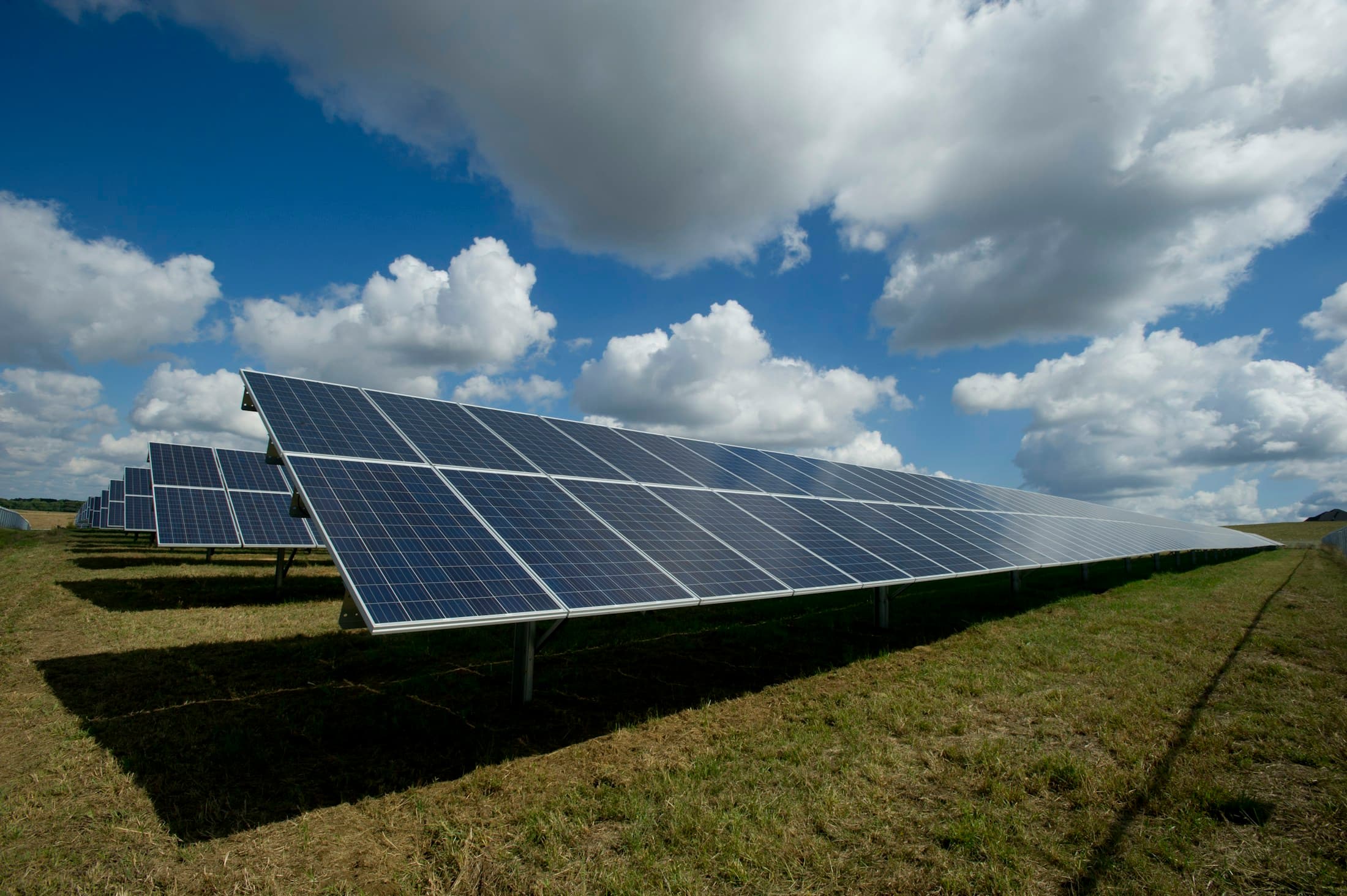
Daytime electricity from your own roof
On-grid and hybrid systems sized around how your household actually uses electricity, rather than chasing the largest possible number.
Benefits
What changes once solar is installed
A smaller daytime bill
Electricity used while the sun is up comes from your roof instead of the grid.
More resilient to tariff rises
The share of consumption covered by solar is not affected when electricity tariffs go up.
Output you can monitor
Modern inverters send production data to an app, so a drop in performance is noticed early.
Light maintenance
Nothing rotates. Routine care means cleaning the modules and periodic inspections.
System types
Three configurations, three different needs
The configuration you pick determines cost, complexity, and what happens when the grid goes down.
On-grid
Stays connected to the PLN grid, no battery. The simplest option and the lowest cost per kWp. During an outage the system shuts down as well, to keep line workers safe.
Best for
Households that are active during the day
Hybrid
Grid-connected and battery-backed. Surplus output is stored for the evening or for outages. It costs more because of the battery.
Best for
Homes with frequent outages or a need for backup power
Off-grid
Stands alone with no grid connection; modules and batteries carry the entire load. Capacity has to be sized with enough reserve.
Best for
Locations the grid has not reached
Components
What goes onto your roof
The product range we work with. The final configuration is decided after the site survey and stated in your quotation.
Solar modules
450–720 Wp, monocrystalline, polycrystalline or bifacial, chosen to suit the condition and area of your roof.
Inverter
Available for on-grid, hybrid and off-grid systems, up to 40 kWp for residential installations.
Monitoring
Real-time production data through the inverter manufacturer app, including IV curve scanning to catch a drop in performance early.
Supporting materials
AC combiner panel, smart meter, mounting system, AC/DC cabling, grounding, and batteries for hybrid and off-grid systems.
The solar modules we use typically carry a 12-year materials warranty and a 30-year performance warranty from the manufacturer. The exact terms follow the product chosen for your project and are always stated in the quotation.
What to know before you calculate savings
Since Ministerial Regulation ESDM No. 2 of 2024, net metering no longer exists. Surplus electricity exported to the PLN grid does not reduce your bill any more. Savings now come only from the electricity you actually consume while the sun is shining.
- A home that sits empty during the day saves far less than one that is occupied all day.
- A larger system does not automatically mean larger savings if the electricity goes unused.
- Shifting usage — washing machine, water pump, air conditioning — into daylight hours makes a real difference.
The process
From consultation to a running system
Consultation
We ask about your consumption pattern, your bill and the condition of your roof — over WhatsApp or by phone.
Site survey
Roof measurement, structural and electrical inspection, then an energy production simulation.
Installation
Modules, inverter and protection devices are installed, followed by testing & commissioning.
Maintenance
Performance monitoring and scheduled servicing, so output does not quietly decline.
Questions we get often
How long does installation take?
For a household system, the physical installation is usually finished within days of the components arriving. The exact duration depends on system size, roof condition, and the PLN permitting process where the system is grid-connected.
Is my roof strong enough for solar modules?
That is one of the things checked during the site survey. We assess the roof structure, the roofing material and the pitch before deciding which mounting system to use.
What happens during a power outage?
On an on-grid system, solar shuts down when the grid goes down — a safety requirement so no current flows back into lines being repaired. If you need power to stay on, the option is a hybrid system with batteries.
What maintenance is required?
Periodic cleaning of the module surface and inspection of the electrical connections. Production data from the inverter is used to catch any drop in performance early.
Start with your monthly electricity bill
Our calculator gives you an estimated system size and savings without asking for contact details first.